




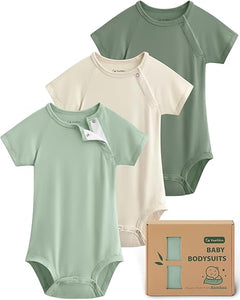
Cotton Baby Bodysuits, Short Sleeve, 5-Pack
Prix de vente€18,95

Quick Search:
Best Seller

Need Some Inspiration?
By Mark Reynolds | Textile Specialist & Child Product Safety Researcher
Few things trigger new-parent anxiety quite like deciding how to dress a newborn. As a textile researcher and father, I see parents fall into the same trap every season: worrying that their baby is too cold, piling on thick layers, and inadvertently creating an overheating or safety hazard.
Infant thermoregulation is far less developed than ours. Because babies cannot regulate their body temperature efficiently, improper fabric layering and bulky outerwear remain some of the most common—and preventable—safety mistakes made at home.
By applying official American Academy of Pediatrics (AAP) safe sleep standards and National Highway Traffic Safety Administration (NHTSA) vehicle safety guidelines, this guide breaks down the precise science of seasonal layering, TOG ratings, and fabric selection for every real-world scenario.
Before building your baby's seasonal wardrobe, memorize these four evidence-based rules:
Spring weather is notoriously unpredictable. Fluctuating outdoor temperatures combined with early indoor air conditioning make spring a prime season for temperature misjudgments.
Adopt a two-layer system: a breathable base layer paired with a protective outer garment. A stretchy, high-quality cotton or bamboo bodysuit acts as the ideal base layer—it stays tucked in, keeping the belly covered even as your baby rolls or crawls. Add a lightweight, wind-resistant outer jacket for stroller walks.
On milder spring days, a single long-sleeve organic cotton onesie is sufficient. Avoid heavy fleece garments during this transitional period; fleece traps body heat and sweat, which can quickly chill a baby if a breeze hits.
For typical spring nurseries (64°F–72°F / 18°C–22°C):
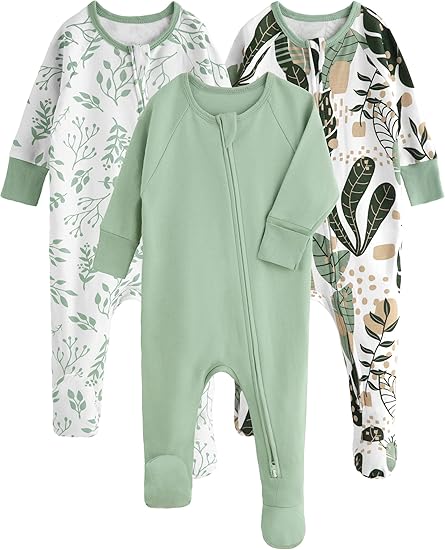
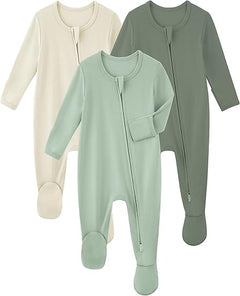
Safety Tip: Choose sleepwear equipped with a 2-way zipper. This allows for quick, seamless midnight diaper changes from the bottom up without exposing your baby's torso to cold air.
When stepping into air-conditioned spaces below 72°F (22°C), shield your baby from direct drafts by adding thin cotton leggings or a light gauze wrap to protect their core and abdomen.
Summer care focuses on thermoregulation, moisture-wicking fabrics, and preventing prickly heat rashes caused by trapped moisture.
When outdoor temperatures climb, prioritize loose-fitting, single-layer garments crafted from natural, breathable weaves. Loose short-sleeve bodysuits and rompers allow air to circulate freely around active 6- to 12-month-old crawlers, preventing trapped sweat and skin irritation.
A common dilemma for parents: How do I dress my baby when the central AC is running? When indoor temperatures drop to 68°F–73°F (20°C–23°C):
Never leave a baby sleeping or lounging in an air-conditioned room in just a diaper. Cold airflow on an exposed abdomen can cause physical discomfort and unsettled sleep.
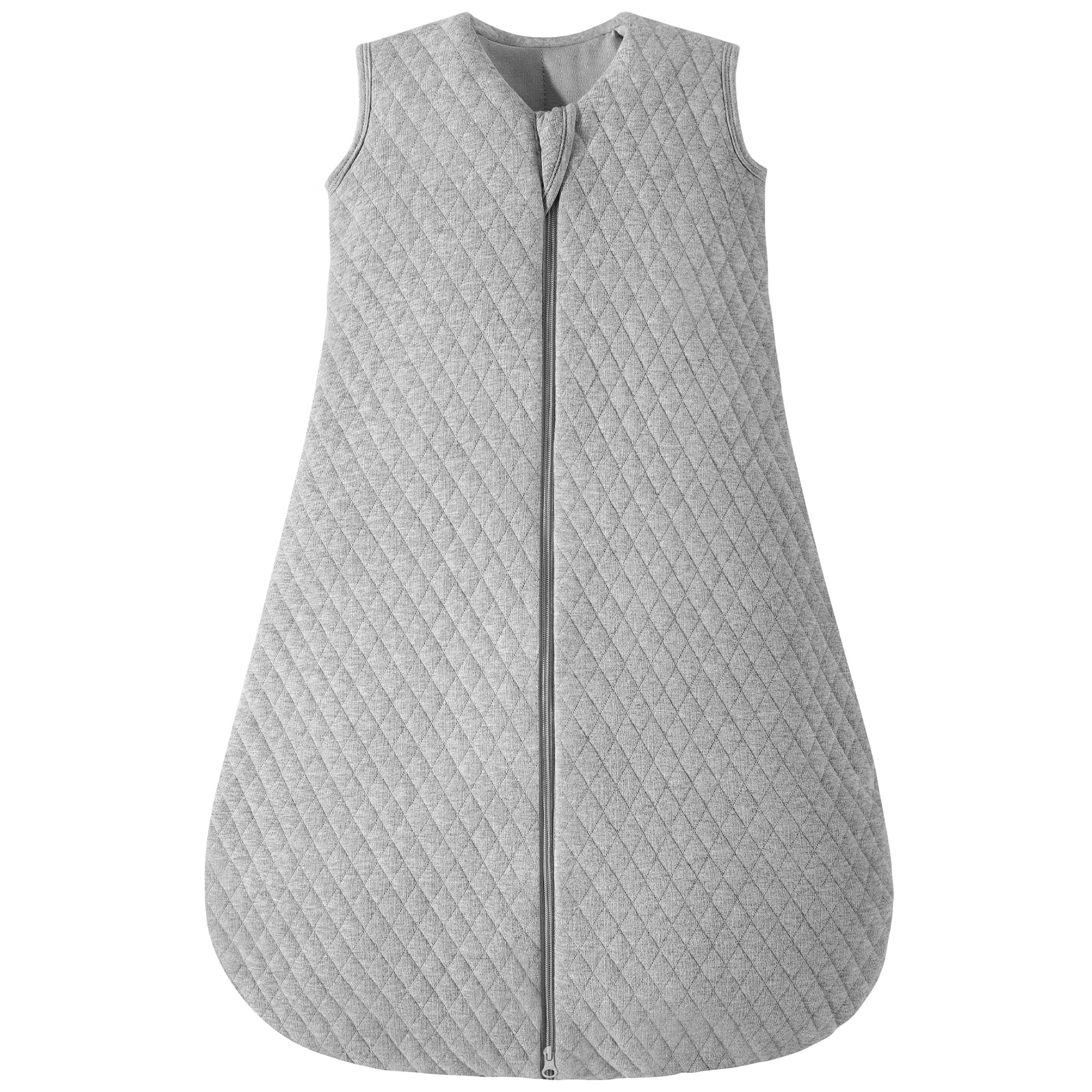
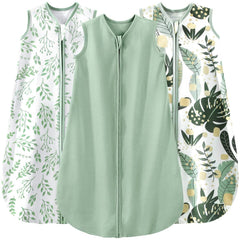
For hot summer nights or rooms over 75°F (24°C), switch to an ultra-thin 0.2 TOG sleep sack. These featherlight wearable blankets prevent kicking, keep the core comfortable, and completely eliminate the danger of loose sheets.
Autumn demands a gradual layering strategy rather than a sudden shift into heavy winter gear.
Early autumn mirrors late spring. A single long-sleeve organic cotton bodysuit is your best go-to option. Fabrics blended with bamboo viscose are exceptionally effective during early autumn, offering superior moisture-wicking properties to handle lingering seasonal humidity.
Introduce a light mid-layer over the base layer, such as soft leggings or a thin knit vest. Vests are an excellent textile solution: they insulate the core chest and back while leaving the arms completely free for developmental movement.
In late autumn, indoor heating systems create a sharp contrast between chilly outdoor air and warm indoor rooms. Always peel off heavy outer layers as soon as you step indoors to prevent rapid overheating and sweating.
Equip your little one with ultra-breathable, scientifically rated sleepwear designed for every season.
Our Story: Everyday Comfort for Real Parenting
By the Yoofoss Team When you’re preparing for a new baby, it’s easy to feel overwhelmed. From $80 boutique sleep sacks to endless marketing hype promising "magical" sleep solutions, modern parentin...
En savoir plus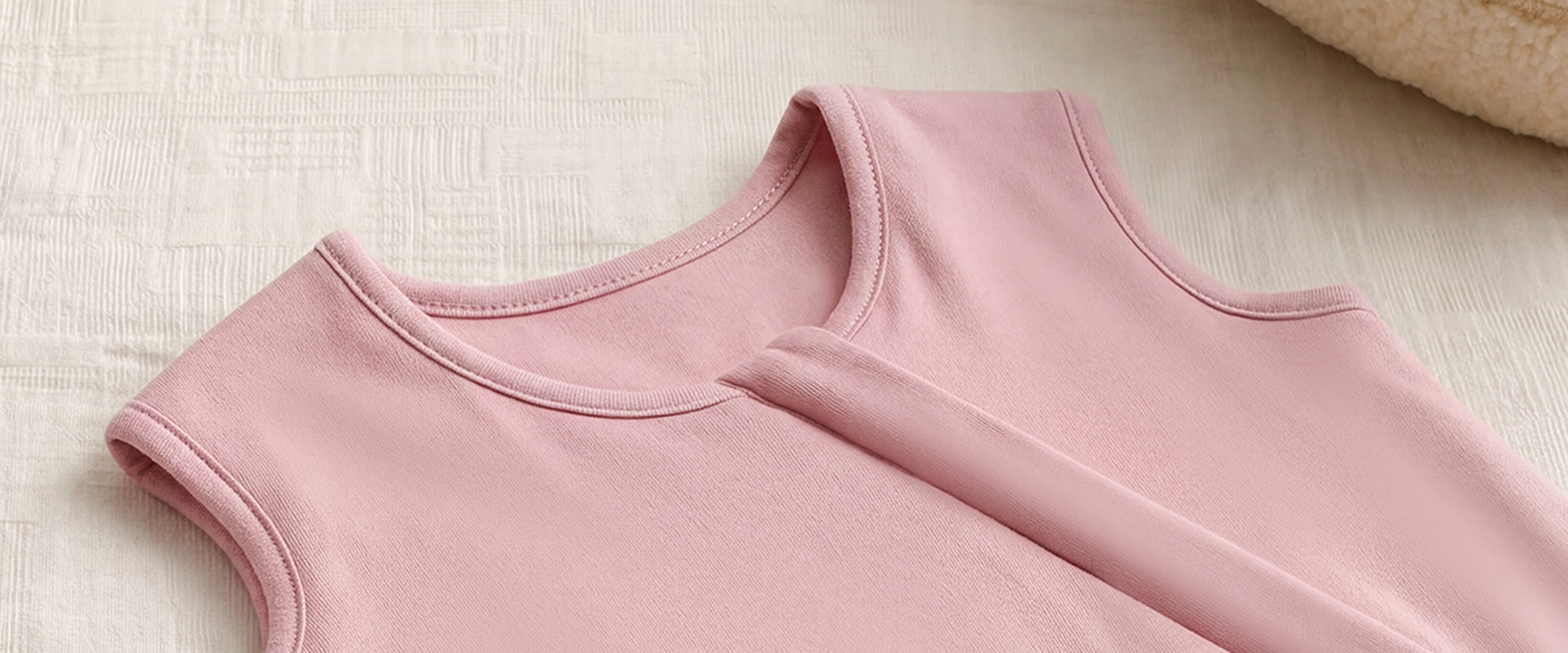
The Midnight Survival Guide: How to Dress Your Baby for Safer, Sweeter Sleep
Those first few months with a newborn are a beautiful, heart-melting blur. But let’s be entirely honest—they are also incredibly exhausting. When you’re operating on two hours of broken sleep and s...
En savoir plus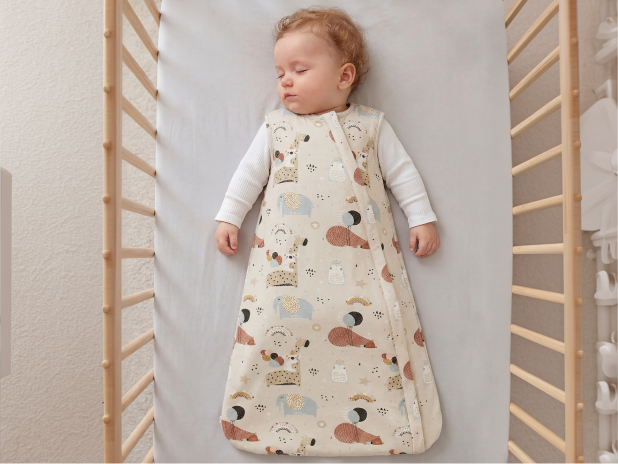
How to Choose the Right Glasses for Kids and Teens
As a first-time mom, midnight diaper changes used to be a nightmare. The 2-way zipper on this sleeper is a literal stroke of genius.
En savoir plus
Get updates about exclusive offers, product drops, and snag a welcome discount when you subscribe.



Laisser un commentaire
Ce site est protégé par hCaptcha, et la Politique de confidentialité et les Conditions de service de hCaptcha s’appliquent.